
The Cho Must Go On
- September 14, 2015 - 2:10am
Margaret Cho was a comedian even before she knew it.
“As a kid, I was thinking all these things,” Cho, 46, recalls, expounding on her surprising childhood shyness, “and when I would say them, people would laugh. I was really confused by that.”
It makes sense now, of course. Cho, after all, has turned life’s ugly truths – from political injustices to homophobia and the gory details of her colonoscopy – into 20 years of comedic gold.
Luckily, for Cho, the world is still insane. Everything happens right in front of us, in real time, and we can’t turn away. And Cho, naturally, has something to say about that. You know, along with gun control, beheadings, the Amy Schumer movie shooting, rape, female comedian sexism and the “systematic slaughter of African Americans.”
Yes, Cho is still fearless. Yes, she is still notorious. And yes, her latest tour, psyCHO, will – like all things Cho – tear down the world’s wrongdoers in the fiercest and funniest of ways.
The first time I interviewed you was while I was in college. And the world, it seemed, was less fucked up then.
(Laughs) It’s still being fucked up. Like, I think it was always this fucked up and we didn’t know about it because we didn’t have Facebook and Twitter to alarm us every single day. I remember when you really had to look for beheading videos… (laughs). You couldn’t just start playing them.
How do you – and how should _we_ – deal with the accessibility of... everything?
I understand that there are a lot of things that need our attention, and I think maybe pick your battles. Which causes do you really want to look at and think about? I just wanna get over police brutality. That, to me, is the most pressing issue, so my thing is dashboard cam. I’m so dashboard cam / body cam; that’s what I watch for hours on end.
Your upcoming show will assess some of the serious issues we’re facing today. How do you balance comedy and sociopolitical issues?
You have to find a truth there. For me, comedy or humor is often a coping mechanism. A lot of what I’m talking about is police brutality and the different sides of it that I’ve encountered and what I see happening in the media. As a comedian, it’s a kind of alchemy that’s really the magic, you know. Something so tragic and terrible as this systematic slaughter of African Americans in this country – how do you find some way to talk about that that isn’t totally depressing?
How do you? And moreover, how do you turn it into comedy?
It’s funny, because whenever white and black people fight, Asians and Mexicans don’t know what to do. ’Cause we’re like, “Are we white? Or are we black? We just wanna pick the winning side.” (Laughs) For me the joke here is the gradations of how we view racism. Everybody’s a human being, so it’s very hard to figure out how to talk about it, so that’s my take on it. And I have a lot of different things that I’m talking about in the show: gun control, and also different kinds of police brutality that I’ve witnessed.
Another comedian, Amy Schumer, whose movie was playing when a gunman opened fire in a Louisiana theater, is taking on gun control as well.
It’s great.
How do you think comedy can create sociopolitical change?
Comedy now is a major player in politics. A lot of people are responsible for this, but the main ones are Jon Stewart, Bill Maher, Hannibal Buress and Stephen Colbert – now Amy Schumer. These are people who are actually changing the way we feel about politics, about who is gonna be president, about race. Comedy can really shift the way we view everything.
Comedy’s a really big part of politics, whether it seems obvious or not. Amy’s been doing it with feminism, and now she’s been thrust into gun control because she’s forced to. This is something that happened at the showing of her film. The most non-violent thing you could want to do is go see a comedy with her in it. Her perspective and her voice is so needed and so fresh, and it’s so not a shoot-’em action experience. For me, that’s very heartbreaking, because her success is so important to me. I consider her like my daughter in comedy.
Comedy’s a mentoring art form, so you have your mentors – that’s another part of the show. My mentors are dead, which is very strange. Joan Rivers and Robin Williams and Taylor Negron – they all passed away last year. So for me, this tour – this is the first time I’m going out without a mentor, without my teachers. They’re all gone, and that’s a really weird feeling.
Regarding Joan: You call her your comedy “mother.” What parts of her life and career do you connect with most?
Just her love of show business, her love of comedy, her love of comedians. Her constantly trying to get me to see the value of my life, and to have gratitude for everything that I receive and to know that I would be safe. She always felt that comedians live the longest in terms of career; we’ll never have to worry; we’ll always have steady work, which is different from actors, especially women who are only able to work for a short period of time in their lives.
And she was fearless, but actually full of fears because she was very, very anxious about whether jokes worked. She put forward this space like (imitating Joan), “I don’t care! I’m a funny person! It’s a joke!” But she was seriously scared about what people would think, and she was always scared people were gonna kick her ass. So that was funny about her. But I really admire her because she challenged the status quo in comedy. When she was performing comedy in the ’60s and ’70s and she was pregnant, she couldn’t even talk about that. She had to use euphemisms to talk about her pregnancy while doing comedy. So that’s how far we’ve come in terms of censorship: what we allow women to talk about.
How do you think the landscape for female comedians has shifted? Are we at a place now where they’re fully accepted by the comedy community and the public?
It’s gotten a lot better. I think we’re way past that weird Christopher Hitchens’ thing that women aren’t funny. Now that thinking seems very old fashioned. It’s very Jerry Lewis to go there. (Laughs) It’s odd that Jerry Lewis even felt that, because I worked with a lot of his contemporaries ’cause I’ve been around forever. I was, like, discovered by Bob Hope and worked with Alan King and Robert Klein and they always really accepted me. Milton Berle too! Very, very accepting of my presence in comedy.
Do you still write a joke a day?
I try to. It takes different forms, but I try to write either a joke or some kind of observation. I’m also working on a book and trying to bring forth this idea that sexual abuse survivors should come forward and stop thinking of themselves as victims and think of themselves as survivors instead. (Cho recently revealed to Billboard that she was raped as a teenager.) So, it’s either a joke or an idea or a song or some type of artistic endeavor that would benefit me creatively. I try.
Is the book only focused on rape victimization?
That’s part of it. Part of it is a memoir – the history of my work in comedy and the people that I have known. There’s a lot of different kinds of stories in there, but one of them is just trying to talk about this idea of victimization. That if we got rid of that word and really focused on the survivor part of it, it would be maybe easier to handle.
When you were young, your father wrote joke books. What was his influence on you when it came to comedy?
He still has an influence; he’s a funny guy. My parents are both really funny people, and they’re also very respectful of the creative life – they think it’s the highest kind of life you can aspire to. And they love writers and writing, so they’re very proud of that aspect of my work. So, it’s good. My dad’s still always telling me what I should be writing and what he wants me to discuss, so he’s very alive in my creative world.
And your mom, of course, is as well. How often do people come up to you and ask you about her?
Oh, all the time. She’s a genius! She really is. She’s a guitarist, and she’s much better than I am. She plays flamenco guitar. She’s a very, very beautiful singer. She’s a seamstress; she taught me how to sew, which is where I get my design side. I do a little bit of fashion design on the side still. But that’s where I get my inspiration – she’s inspired me to do a lot of different things.
Your tour name is a play on the word “psycho.” What is your definition of a psycho?
I think it’s allowing your rage to consume you, allowing your insanity to consume you, allowing other people’s insanity to consume you. I think psycho is often a very feminizing term. “Oh, she’s a psycho bitch.” “She’s fucking psycho.” That’s the worst thing you can say about a woman. Even the movie Psycho – Anthony Perkins is trying to be his mother, so that’s a psycho. It’s a feminized kind of experience. It’s almost hysterical. Women are always hysterical or psycho. So that’s why I like it.
Do you have any psychotic tendencies?
I’m actually more OCD than psycho. There’s a drought in California, so you’re always checking – I’m always checking the tap. I’m always going online when I’m away to check the water meter. First of all, I shut off the water when I leave. Not only shut it off in the house – I shut it off in the water main! Everything is shut down! (Laughs)
We are currently, and thankfully, experiencing increased trans visibility. As someone who identifies as bisexual, where do you see the bisexual movement headed?
I think it’s different. Bisexuality is considered one foot out, one foot in. You don’t qualify as gay all the time. There’s this element of distrust. Visibility is very important for the trans community because of the suicide rate of teenagers and the violence that goes underreported and the disappearance of trans women all over the place. There’s not been a lot of rage about that because people didn’t know.
Now, there’s more of an understanding and it’s not acceptable anymore, so I think that’s wonderful. I would love to see that for the bisexual community, but I also have an understanding too. I get it because I started as a lesbian and then realized that there was more to my sexuality than I realized. I thought I was being very free and very out, but there was more to the story. It’s hard still because I felt like, “Am I going through a phase?” You always question yourself in the bisexual community. You don’t really know.
When did you first know you were funny?
It took a while to figure out how to be a standup comedian. And this is when I met Robin Williams. I actually met him when I was much younger, but I met him again as a comedian. He had become very famous doing Mork and Mindy (1978-1982), and he was doing movies at that point and he had been the doorman at a comedy club that I lived across the street from called the Holy City Zoo (in San Francisco). I would perform there and he would always come in and do surprise performances, but this was, like, every night, so it really wasn’t that much of a surprise. He was there every day, and I would always have to perform after him. I don’t know why he got it in his head, “I have to go before her all the time,” but I learned how to do comedy by going after him and bombing for years. (Laughs)
When you eventually did launch your professional comedy career, why was it important to you to be as open about your life as possible?
That style became very cool. When I started I was just trying to figure it out, but when I was in my early 20s, talking about things in great obsessive details was really brought on by doing comedy in bookstores and people like Janeane Garofalo and Marc Maron, who were in more of the alternative scene. Which is Colin Quinn, which is actually Ben Stiller. We would do these weird midnight writing sessions with Ben Stiller and Judd Apatow at this coffeehouse on La Brea and you would see all these comics. Now they’re very famous people, of course. But they would get together to write at midnight. It was this thing that was very powerful and very alive, and the more you could make yourself look bad as a person, you looked better as a comic.

Leona Lewis, Free & Unfiltered
- September 13, 2015 - 3:49pm
Leona Lewis is having a Mariah Carey moment. She’s singing, mimicking the ascending whistle notes that close out Carey’s early-’90s hit “Emotions.” It’s not much – just a few notes, sung as the song comes up casually in our conversation – but this “moment” entails more than an impromptu Lewis performance via cellphone.
Lewis mirrors Carey not just vocally – both have voices strong enough to knock you over. But the “Bleeding Love” belter’s career is soaring with the same wings that Carey once spread back in 1997, when the legend emancipated herself personally and professionally. The U.K. X Factor star walked away from her label of seven years, Simon Cowell’s Syco, in 2014, citing creative differences; now signed to Def Jam, Lewis’ first studio album, I Am, flaunts her newfound independence.
Liberation certainly looks good on Lewis. The 30-year-old Londoner has never seemed more free… and fun. Who knew she played drag queen bingo? Or how growing up around her gay uncle helped her learn to be herself? And that she has “gay husbands” in major cities across the world? Well, now we do.
You’ve played a lot of gigs in your life. Been on a lot of stages. What was it like being on the G-A-Y stage in the U.K. recently?
Oh my god. Doing G-A-Y is one of the funnest shows I get to do, and that’s why I always go back whenever there’s an album. Literally – you can just do whatever you want. The more flamboyant, the more fun it is and the more the audience gives you so much energy. So yeah, there’s always so much love and support there.
Are you used to being around that many gays in your everyday life?
I mean, yeah. I obviously have so many gay husbands.
What constitutes a “gay husband”– and how many gay husbands do you have?!
I have my L.A. gay husband, and I have my U.K. gay husbands. I’ve got a few there, and that just constitutes as my gay best friend. If I don’t get married, then clearly we’ll end up getting married. (Laughs)
I wonder, though: Can one gay husband get jealous over another gay husband?
Sometimes they do. I definitely split my time equally. And I get jealous over my gay husbands with their straight wives! So they have to split their time with them for me. It’s a partnership.
When were you first aware of your gay following?
When I was doing The X Factor every week we’d have people coming down to the show, and I found myself with a huge gay following. Again, just so much love. People were waiting for me after the shows, and I’d go and sign stuff, so it was really early on that I became aware of that.
In 2007, “Bleeding Love” elevated you in so many ways, including within the gay community. You know how we love our big, belty voices. I can’t imagine what that song did for your gaggle of gay husbands.
(Laughs) They were loving it. And they’re always giving me opinions on what I am to wear on stage and what I am to do on stage. I’m like, “All right, guys; calm down.”
How often do you take their advice?
I mean, it depends on who it’s coming from. I have my stylist – a very close friend of mine – who’s an amazing stylist. He has suggestions on wardrobe and stuff like that. And I listen. But some of them are crazy. Sometimes I’m like, “Yeah, no; you wear that.”
How do you think your gay fans will relate to I Am?
I have a lot of fans who are younger and haven’t even come out to their families yet. I do this campaign called “I Am Empowered” to share stories, mantras and affirmations, and I got one guy who wrote me saying he gets bullied a lot in school because he’s gay. He says he just wants me to empower him to get through that and get through the torment, and so I know that it definitely is a very, very strong message to the gay community, especially being young and coming out and being open. It’s very hard and it’s a very difficult time, and you need to be empowered in that. You need to have the strength to stand true in what you are and who you are. And it’s a very prevalent message on the album.
How did you end up with a drag queen in the video for “Fire Under My Feet”?
It was my idea. My uncle actually is gay, and when I was younger I remember he would wear makeup and eyeliner. It was the ’80s, so you know – people were all out there. And it was always so normal to me; it was never something I questioned, never something that I found anything other than normal. So I had that experience growing up. And even though he’s not a drag queen, I wanted to put that in the video. I wanted people to know that you can be whatever you want to be.
What did you learn from your uncle about being yourself?
He taught me a lot. When I was younger, it was to be accepting of anything; however people want to express themselves or present themselves is up to them. It’s not something to look at weirdly or that should be shunned. And self-expression – he taught me that. Not being afraid to show who you are.
What does it mean to you to know that your songs are being fiercely lipped by drag queens?
I love it! A couple of months ago I actually went to drag queen bingo and they were commenting on the (“Fire Under My Feet”) video saying, “I love that you have a drag queen in there.”
Did you win at bingo?
I didn’t, unfortunately. But I did get to call out some numbers, which was kind of cool!
Which line on the album means the most to you?
On “I Am” it says, “Thought I would never rise again. But I am, I am.” It’s about going through times and thinking it’s the hardest time and not seeing the forest through the trees but knowing that time is such a big healer and a big factor in so many situations. I feel like so many people give up just as they’re about to have a breakthrough, and sometimes you have to go through that. The line “I am, I am” is, I feel, a powerful affirmation to put out there when you’re going through those times.
Your vocal abilities often draw comparisons to Mariah Carey, Whitney Houston and Celine Dion. What songs of theirs would you be most apt to sing at karaoke?
With Whitney, definitely “I Wanna Dance With Somebody.” I mean, everyone does that song at one point or another! Mariah… it would have to be “Heartbreaker.” It’s just so cool and I love the video – she was in the movie theater, and I remember she had the pink top and her little denim jeans. And Celine: probably “All By Myself” or “My Heart Will Go On.”
What’s your favorite note that’s ever been sung?
I feel like it has to be during “I Will Always Love You” – the long-held note that Whitney does, and you’re like, “What is she doing right now!? She’s killing my soul.”
PETA named you Sexiest Vegetarian in 2008. Where does that rank on your list of career achievements?
Uhh. Quite high! Sexiest anything! I will take what I can get, soooo... that ranks very high.
In your opinion, what’s the sexiest vegetable or fruit?
A peach.
That came to you a lot quicker than I thought it would.
Right?! I surprised myself even.
Now that the album is finished, how are you feeling about the label changes you made in order to honor who you are as an artist?
I feel amazing about it. I’m lucky enough to be in a position where I made that leap of faith and then, luckily, there were people at the other side to catch me and help me do what I wanted to do. I really count myself blessed because it does take a lot to walk away from such a big situation. But, again, I knew what I needed to change and that I needed to do me and be very authentic to me, and so, this is it. I just feel lucky that I can do it; a lot of people don’t get that opportunity.
You say you had to “do me.” Did you ever feel like you’d strayed from your authentic self?
I feel like I’ve definitely always been true to myself, but sometimes I feel like myself, as well as other people, get a bit lost by everything that goes on within music. The heart of what we do in music is to connect with people and express ourselves and share that with people. But I feel like the hair and the makeup and the designer clothes takes over everything. The fame, the notoriety and letting that get to your head is so dangerous. My dad’s always told me don’t believe the hype. That’s something that’s always stayed with me.
When you look out at the pop scene, do you see a lot of authenticity?
You know what I see a lot of? Amazing artists. And I also see a lot of (them) seem to be a bit lost. But again, it’s all part of an individual’s journey and it’s all part of learning about ourselves. You have to go through that learning process sometimes. There’s a lot of very young people in the industry, and being so young and vulnerable and subject to… I don’t know… a lot of impressions, sometimes you can just get lost in it.
“Bleeding Love” was a colossal success, so I have to imagine it set the bar high for you. How much pressure have you felt to match the success of that song and what it did for your career?
Definitely in the beginning I felt pressure. There’s definitely been a lot less pressure the past few years, but for my second album (2009’s Echo), I felt a lot of pressure then.
When I was first recording my (new) album, even before I had a deal, there was never any pressure on me. It was just like, I’m recording music; this is what I do. With my first album, again, there really wasn’t any expectations, so I didn’t really have a lot of pressure. But then after the album blew up and went massive, there definitely was a bit of pressure. I was like, “Oh my gosh, this is happening; I’ve got to step up my game. I’ve got to be better. I’ve got to match it.” I’ve learned over the past few years that that is definitely not conducive to creativity. You have to just go down a new path and blaze a new trail.

Cara Delevingne, Cynthia Nixon, Stephen Fry, Netflix's trans show
- September 12, 2015 - 7:03pm
Cara Delevingne has a lot of acting jobs now
It’s more likely that you know Cara Delevingne from seeing her modeling in the pages of Vogue, or from her appearance in Taylor Swift’s “Bad Blood” video, than from her starring role in the little-seen summer film Paper Towns. (Let’s just say not a lot of tickets were sold.) But you’ll be seeing a lot more of the bisexual British actor – she’s currently dating acclaimed singer-songwriter St. Vincent – in the coming year. Right around the corner is the Peter Pan adaptation, Pan, with Hugh Jackman; the Johnny Depp-starring crime-thriller London Fields, which is based on the Martin Amis novel; and she’s playing “Enchantress” in the highly anticipated 2016 DC Comics film Suicide Squad. Not that you’ll be missing Ms. Delevingne in the modeling world anytime soon. She’s still very young, after all, and that’s a gig that’ll last until you turn, say, 25. After that, it helps if you’ve got movie stardom to fall back on. It looks like she will.
Cynthia Nixon meets James White
Josh Mond. You don’t know that name. It’s OK. He co-produced the acclaimed Martha Marcy May Marlene, and has just completed his debut feature, James White, which premieres at the Toronto International Film Festival in the Discovery Programme, and has already received the 2015 Sundance “Best of Next” Award. You do know Cynthia Nixon, however, and she’s one of that film’s cast members, alongside up-and-comer Christopher Abbott (Girls), Ron Livingston, musician Scott “Kid Cudi” Mescudi and Mackenzie Leigh (Gotham). The story revolves around a a self-destructuve young man’s coming of age, and it’s earning the kind of buzz first-time filmmakers dream of getting. After its bow in Toronto, look for a November release for the serious-minded drama, just in time for those brooding winter months.
Stephen Fry is Coming
The “Favorite Homosexual Award” doesn’t exist, but if it did, we’d want to give it to Stephen Fry (Wilde) every day of his life. The British comic actor and writer is hilarious, wickedly clever, confidently old and paunchy, and, best of all, possessed of a steadfast refusal to suffer right-wing fools. So it’s always nice to hear about him working in something worthy of his talent. That would be the new comedy from James Oakley, The Brits are Coming, co-starring Fry alongside Tim Roth, Uma Thurman, Parker Posey, Maggie Q and Alice Eve. Roth and Thurman play an eccentric con-artist couple in debt to gangster boss Maggie Q. After being sold out by former associate Fry, the pair have to stage a jewel heist to dissuade Q from, you know, murdering them. The movie is currently shooting in New York and due sometime in 2016.
Netflix’s trans teen show
Acclaimed indie filmmakers Zal Batmanglij and Brit Marling (Sound of My Voice) are moving to Netflix. This makes perfect sense, of course, as the pair represent a kind of Hollywood refusal. Their movies have stubbornly resisted fitting into big studio marketing plans, and that’s exactly the kind of filmmaker Netflix programming has championed, resulting in the network’s critical and commercial success. Their upcoming series is called The OA, and the details are fairly secret, but we do know that it stars writer-actor Marling. We’ve also learned that a casting call is out for a teenage, Asian, transgender male, a person who will be carrying the weight of a major role in the project. Hollywood casting offices are not exactly clamoring to see young trans actors, so the role will most likely be filled by an unknown. But if you want more happy evidence that Time magazine’s “Trans Tipping Point” headline is becoming reality, here it is. And look for the show on Netflix in mid-2016.
Hear Me Out: Carly Rae Jepsen, Robyn
- September 12, 2015 - 4:09pm
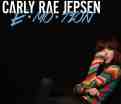
Carly Rae Jepsen, E•MO•TION
Carly Rae Jepsen came out of nowhere, seized radio, dug a hole in your head and planted a little song there named “Call Me Maybe.” It grew and grew. It grew so much you are, at this very moment, singing it. And it’s just the beginning, now that she’s released her third album, which, again, will lodge itself into the depths of your consciousness. E•MO•TION stands as the singular best piece of pop music this year so far, and right about now, you’re thinking: “But Carly Rae Jepsen?” Yes. I know. Carly Rae Jepsen. Who sings “Call Me Maybe.” For real, though: E•MO•TION is a nonstop parade of hooks without being the “Call Me Maybe” confection factory it very well could have been. Jepsen and a crew of consummate producers shake up the formula that made her famous, and they do it with surprising stylistic flourishes, an ear for the ’80s and a lingering sweet-pop center. Cyndi Lauper, Prince and the Go-Gos are ever present on E•MO•TION, their panache coloring in songs such as the brilliant sax-tinged “Run Away With Me” and “When I Needed You,” with its “hey!” call outs (so awesomely ’80s, right?). “I Really Like You” pops with infectious flair, and Sia gives the heartfelt “Making the Most of the Night” – a volcano of a song, its chorus spilling out everywhere – her magic music-making touch. E•MO•TION is this year’s pop album to beat. Girls and boys, get to work.
Grade: A-
Robyn & La Bagatelle Magique, Love Is Free
Remember 1997? You were fiercely smackin’ that sonic bubblegum Robyn gave you. Years later, in 2005, the Swedish “Show Me Love” singer reemerged as an edgier version of her ’90s self. Harder, sadder, dancier. And those jams were consistently on point; Robyn knew the human psyche. She knew heartache. She was… just like us. Now, she’s at it again. With keyboardist Markus Jägerstedt and the late producer Christian Falk, Robyn – fronting their new trio, La Bagatelle Magique – releases yet another mini-album (if her post-’90s career is any indication, Robyn doesn’t do full albums anymore). The four songs aren’t as emotionally fulfilling as, say, “Dancing on My Own” or “Hang with Me”; but, not counting the awkward framing and wonky vocals on “Tell You (Today),” they certainly hold up on their own. And, you know, it’s Robyn, whose presence alone makes even a tiny misstep like “Tell You” tolerable. “Love Is Free” is light on words and heavy on sound; it’s untamed and exhilarating, and its house-vibed early-’90s build, inspired. “Set Me Free” works up a sweat, too, as it turns back time another decade. Swathed in ’80s synths, it’s further proof that – solo or not – nobody gets bodies talkin’ quite like Robyn.
Grade: B
Also Out
Ryn Weaver, The Fool
Ryn Weaver went viral with a booming piece of jolty dream-pop called “OctaHate.” If you’ve ever heard of the Internet, you’ve likely heard the song. Unleashing the 23-year-old onto the world, the song opened the doors to her full-length debut The Fool, a decidedly less straightforward pop album than her first single suggested. Is it alternative? Is it indie? Is it pop? It’s all of these things. And more. There’s no box for Weaver to step in; that’s by choice. As she pursues a decently potent palette, from the Stevie Nicks-inspired “Here Is Home” to the percolating tribal-teemed “Runaway,” her wild ambitions could use some honing. And soon enough, then, every song will live up to the pop promise of “OctaHate.”
Noah Gundersen, Carry the Ghost
Unhurried and melancholic, Noah Gundersen’s honeyed voice emerges like an early-winter frost on “Slow Dancer.” A bed of electric fuzz and stormy strings cuts through the piano lead-in, and those who have not yet heard of Gundersen will, in that moment, wish they had sooner. And particularly for fans of Ryan Adams, one of Gundersen’s obvious influences. Like Adams, the 26-year-old is a rousing emotional current – the moon to your ocean – and his sophomore LP, Carry the Ghost, brims with reflective doozies that bury themselves as deep as deep goes.